

How the Design Language of Classical Furniture Evolved
Baroque, Rococo, Neoclassicism and Art Deco: what each period gave to furniture design, and how that inheritance lives on today.
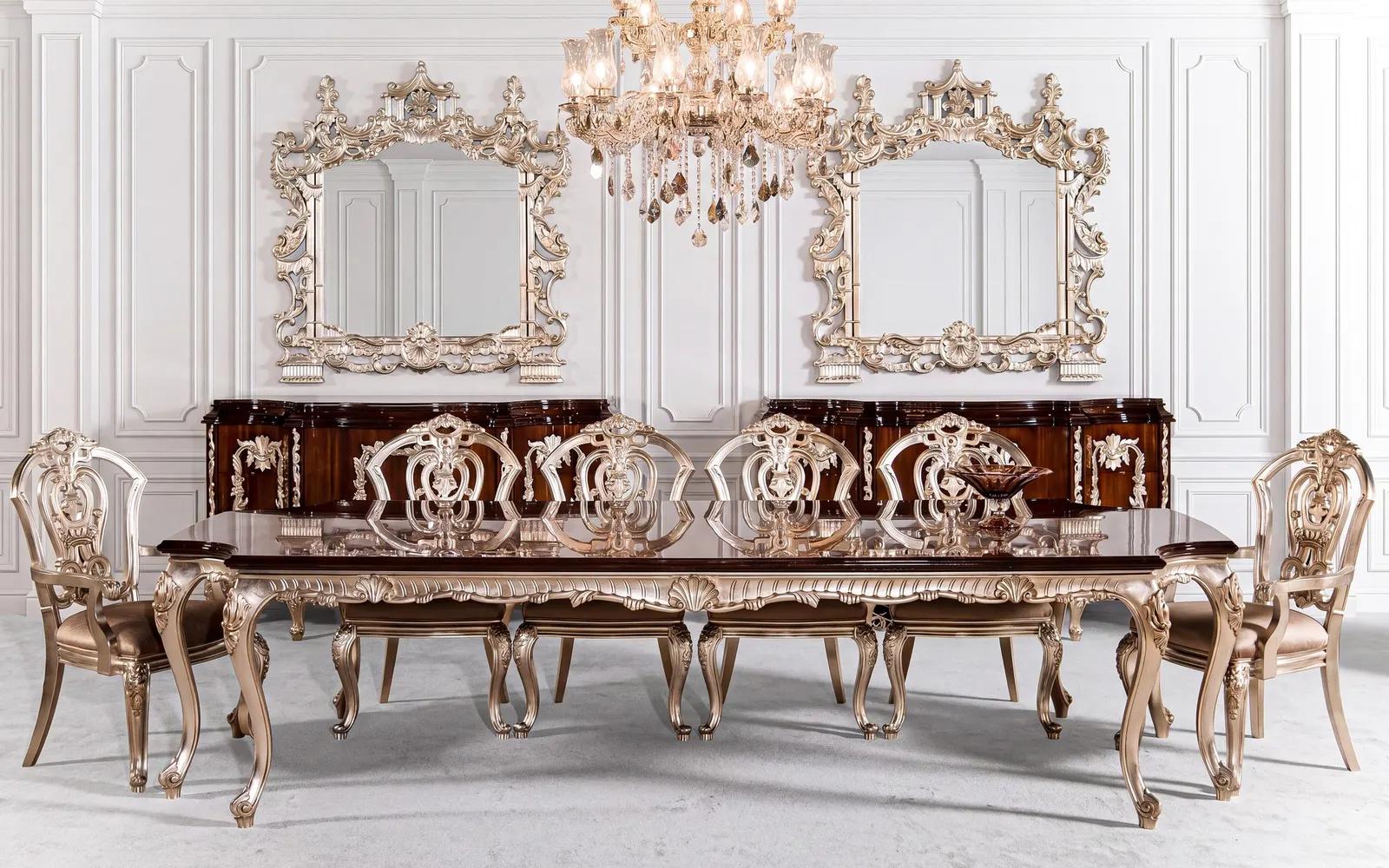
The curved legs, carved motifs and refined ornament we see in classical furniture carry the traces of design ideas that developed over centuries. Each period gave furniture a different character: at times grand and theatrical forms, at times balanced proportion and plain lines. Much of the detail in classical and contemporary classical furniture today has its roots in these historical styles.
What defines Baroque furniture?
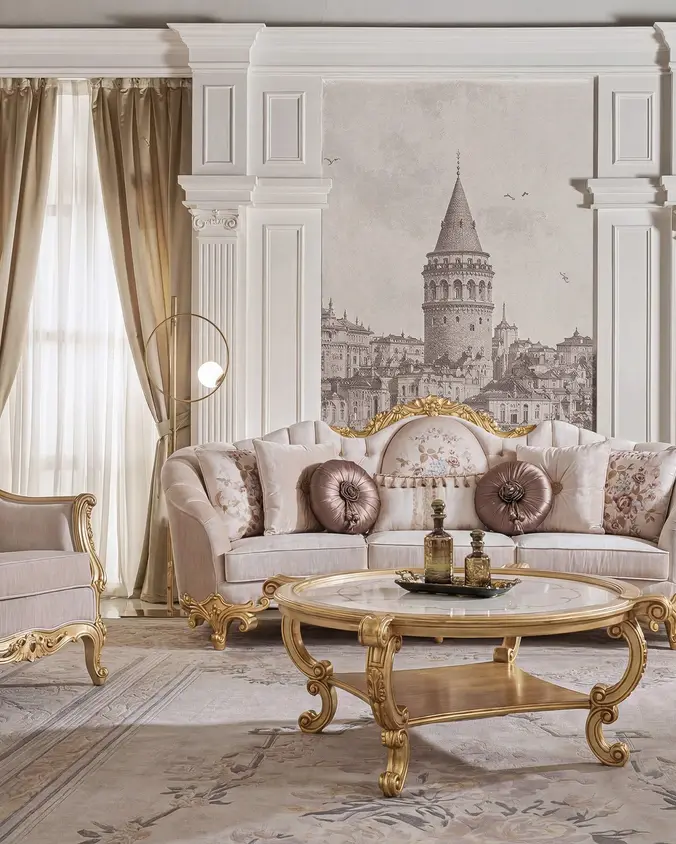
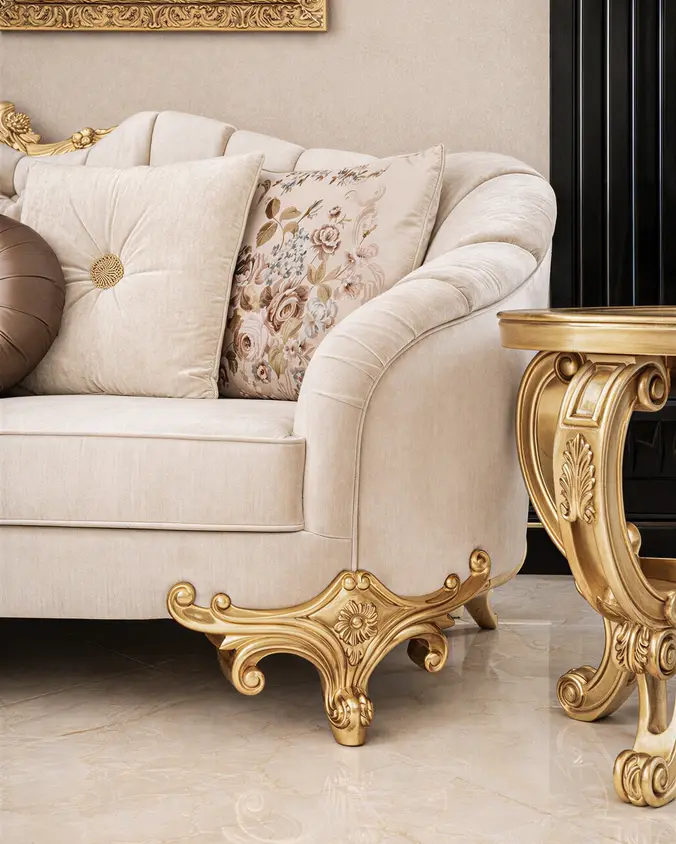
The Baroque, which shaped Europe in the seventeenth century, is known for powerful, dynamic design. Curved lines, pronounced relief, rich carving and opulent surfaces are typical of its furniture. In palaces and noble houses a piece was not only functional but part of a grand interior scheme. The aim was not merely to make an object but to make an impression on the room.
How does Rococo differ from Baroque?
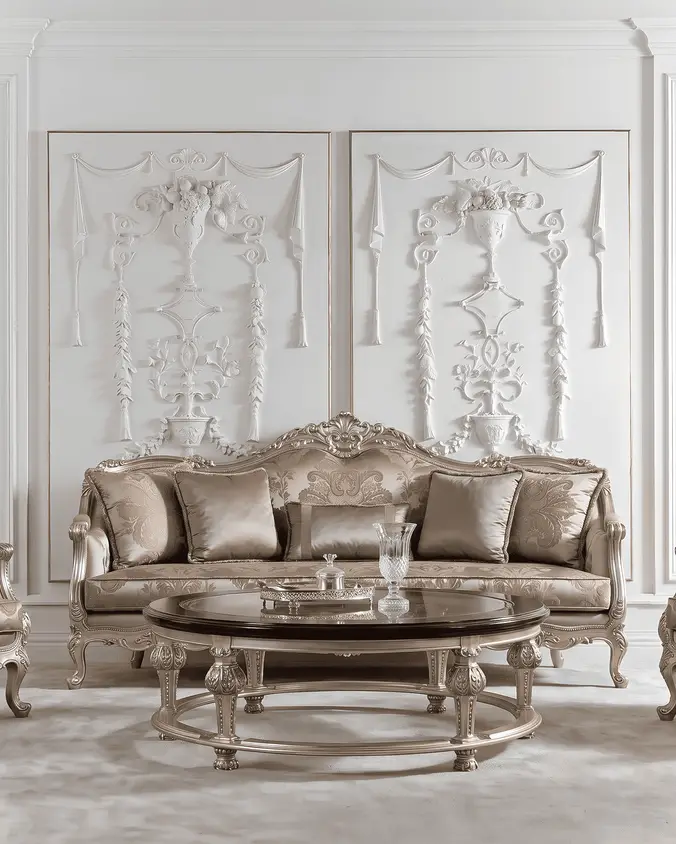
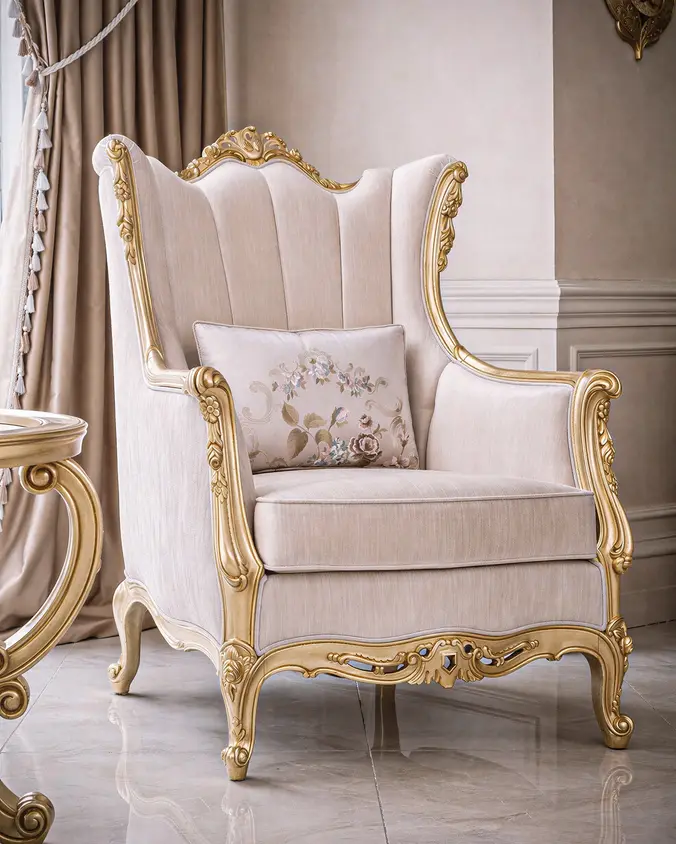
Rococo, which developed in eighteenth-century France, reinterpreted the Baroque’s theatricality in a lighter, more graceful key. Flowers, leaves, shell-like motifs and asymmetrical curves are its hallmarks. Where the Baroque is strong and monumental, Rococo is lively, fine and decorative. Many of the curved forms on the arms and carved frames of classical chairs today recall this tradition.
Why is Neoclassical design calmer and more balanced?
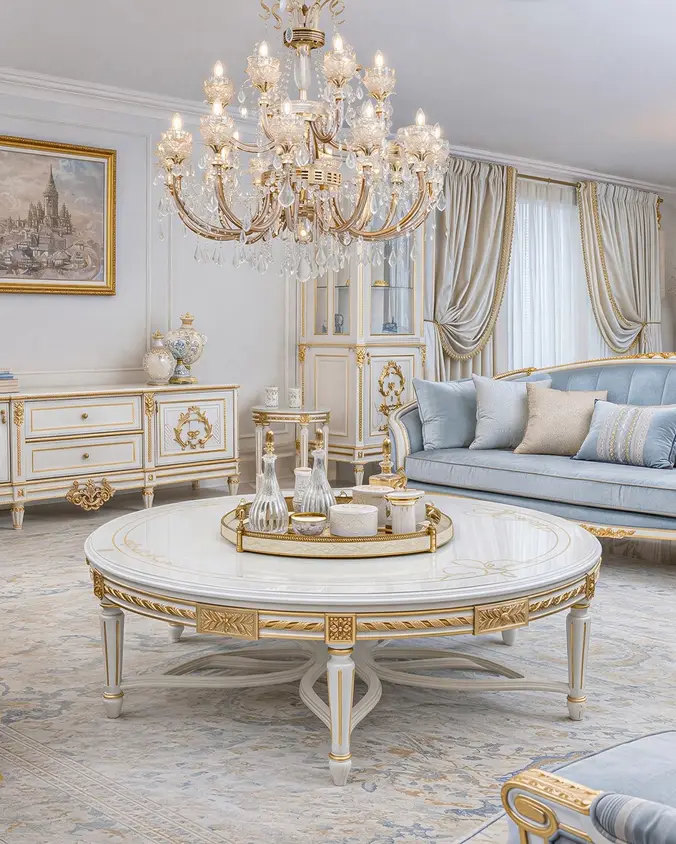
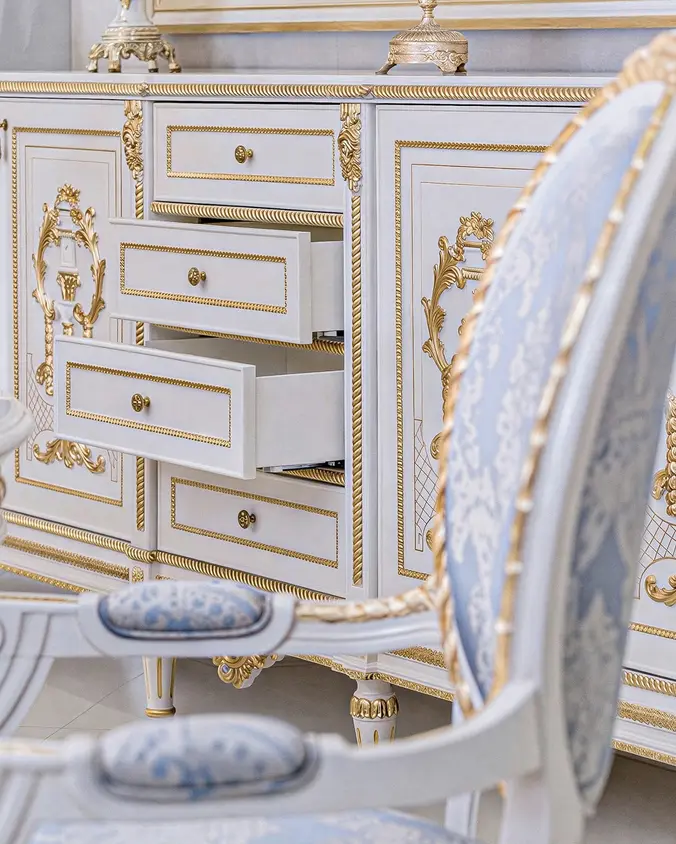
Neoclassicism, which spread in the second half of the eighteenth century, drew on the art of ancient Greece and Rome. The free curves of Rococo gave way to ordered lines, symmetrical forms and measured ornament. Straight or tapering legs, geometric detail and balanced proportion are its signatures. It showed that classical furniture could be powerful through restraint as well as through display.
What did Art Deco bring to furniture?
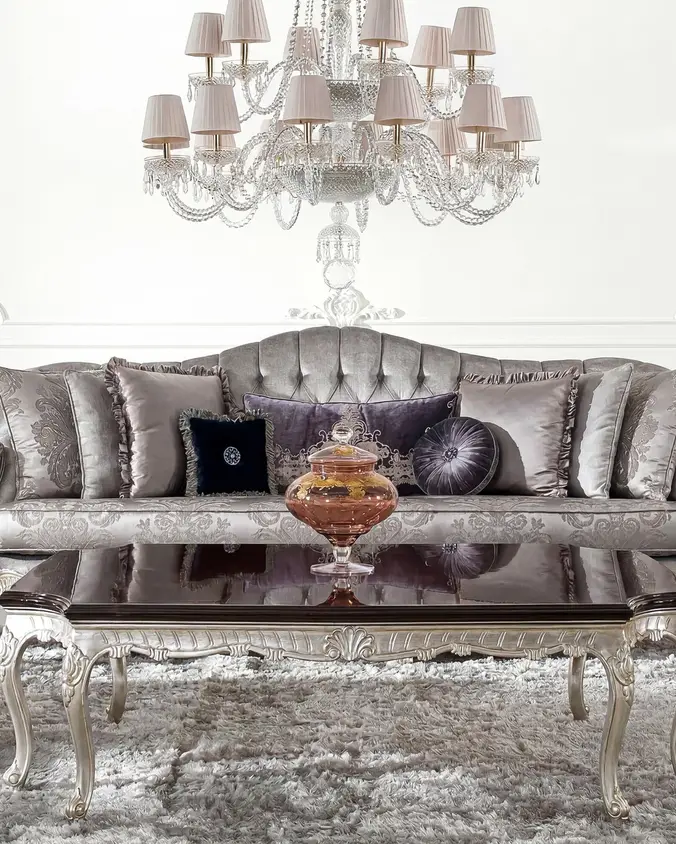
Art Deco, prominent in the 1920s and 1930s, gave traditional ornament a more geometric and modern direction. Crisp lines, symmetrical patterns, polished surfaces and the combination of different materials define the period. Wood veneers, metal details and bold contrasts of colour gave furniture a more contemporary look. Art Deco became a bridge between the decorative richness of classical design and the modern sense of form.
How does this inheritance live on today?
Today’s classical and contemporary classical furniture does not have to copy historical styles line for line. The strength of the Baroque, the curves of Rococo, the measured proportions of Neoclassicism and the geometry of Art Deco, a late and modern movement, can all feed new interpretations. At Artlife 1974 we bring this inheritance together with the woodwork and hand carving of our own workshop. The point is not to repeat a form from the past but to give it its proper place in the rooms we live in now.
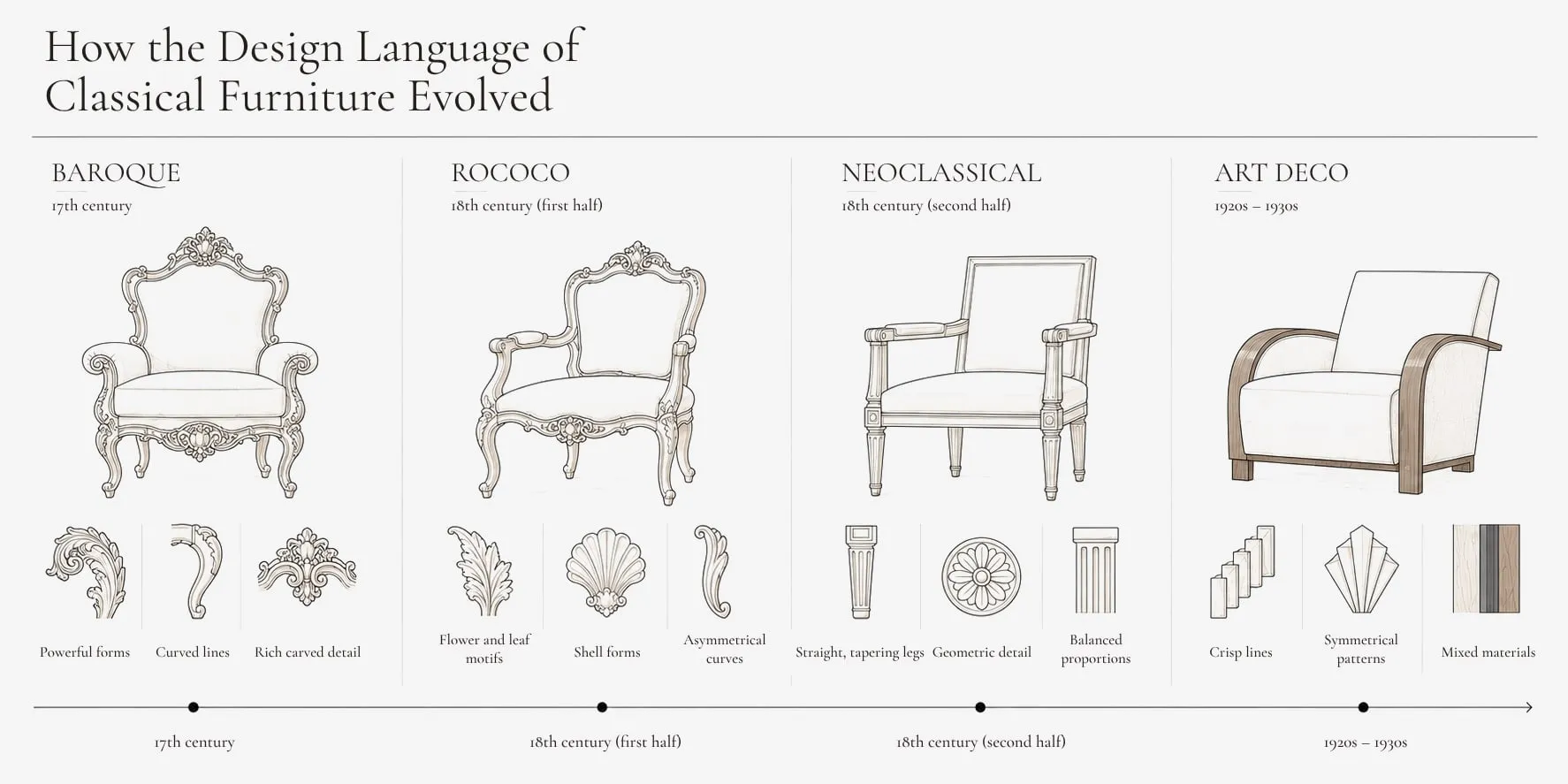
Baroque, Rococo, Neoclassical and Art Deco: four periods, four characters.